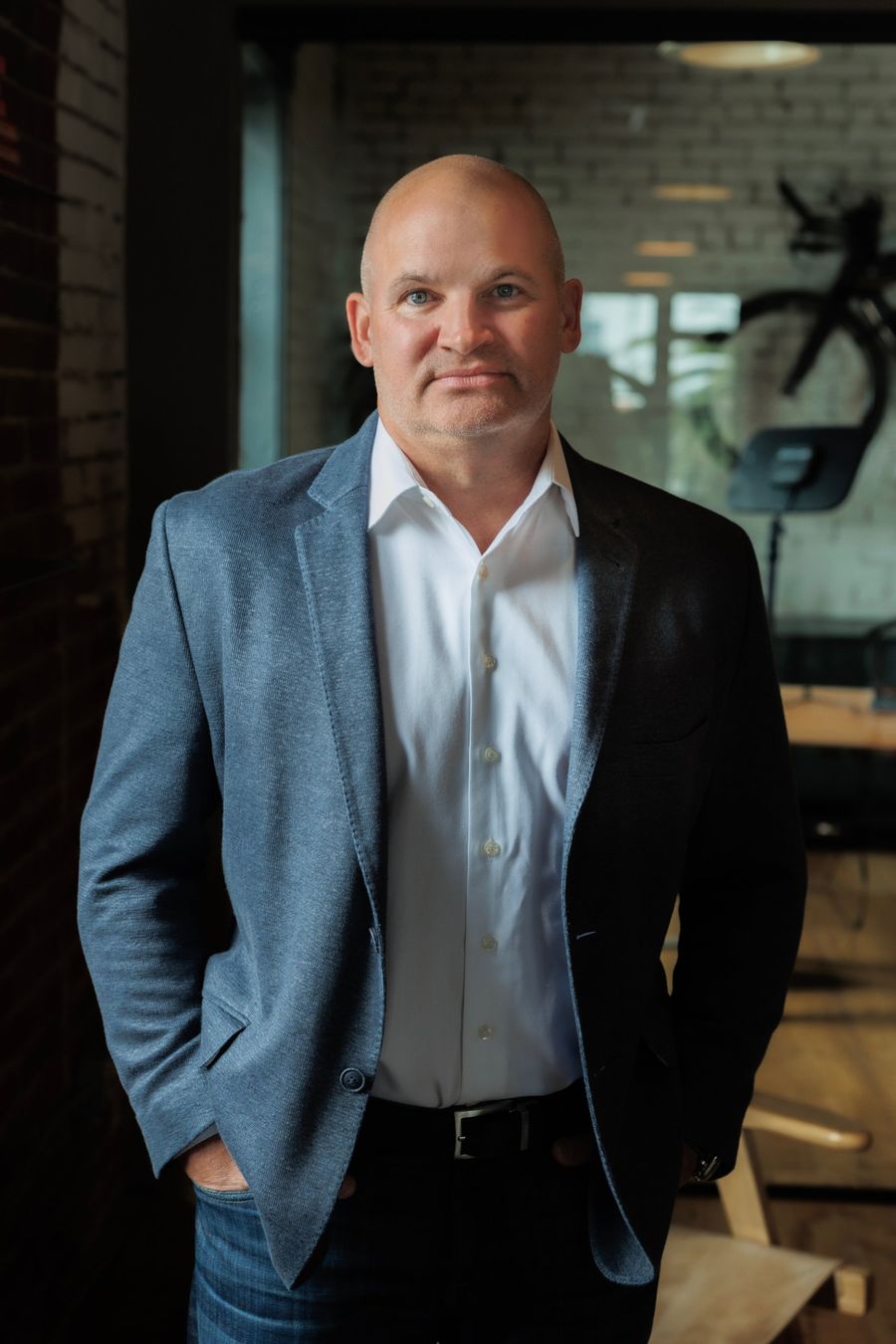
I work with entrepreneurial leadership teams who are ready to stop spinning and start building with intention — clarifying vision, driving alignment, and executing with real accountability.
I work with entrepreneurial leadership teams who are ready to stop spinning and start building with intention. My approach is practical, not theoretical — I guide teams through a proven system for clarifying vision, aligning on priorities, and executing with real accountability.
A multiple-time founder with two successful exits in tech, I bring genuine operator experience to every engagement. I know what it's like to be in the chair — making hard calls, holding a team together, and driving toward a number that actually means something.
The result is a leadership team that is healthier, more cohesive, and genuinely in control of where the business is headed. For investors and boards, this translates directly into measurable enterprise value — the kind that holds up in diligence and compounds through the hold period.
My specific experience working alongside Private Equity firms and Investment Banking advisors means I understand the financial objectives, timelines, and accountability frameworks that sophisticated investors expect — and I help portfolio companies deliver on them.
"Don't just say it — do it. The gap between what leadership teams say and what they actually execute is where enterprise value is made or lost."
— Matt KoblickMatt works at the intersection of operational leadership and financial performance — serving three distinct audiences who share a common need: clarity, accountability, and execution.
PE firms deploying EOS across their portfolio to create operational predictability, drive leadership accountability, and maximize enterprise value from acquisition through exit. Matt bridges EOS tools with your existing operating partner methodologies.
Advisors working with founder-led businesses preparing for a transaction. A company running on EOS is a materially better deal — cleaner data, defined leadership, documented processes, and a management team that can present with confidence.
Leaders of entrepreneurial companies — typically 10 to 250 employees — who are ready to get out of the weeds, align their team around a shared vision, and build something that runs with or without them in the room.
Most entrepreneurial companies share the same underlying challenges. EOS was built to address exactly these — and Matt has spent his career guiding leadership teams through them.
Your leadership team is talented but not aligned. Different people have different visions of where the company is going — and that ambiguity costs you every quarter.
EOS Vision ComponentNothing ever truly gets resolved. Accountability is vague, roles overlap, and performance issues fester. The team is busy but not productive.
EOS People + IssuesYou're working in the business instead of on it. Decisions can't get made without you. Scaling feels impossible because the whole operation depends on your involvement.
EOS Accountability ChartStrategy lives in the conference room. Quarterly priorities get set then forgotten. There's no system to convert vision into real actions that get done.
EOS Traction + RocksTestimonials are representative; client names withheld by request.
EOS is an integrated set of concepts and tools that helps founders and leadership teams get the most out of their companies — organized around six components that address every aspect of running a business with discipline and accountability.
EOS was designed for companies with 10–250 employees — squarely in the lower middle market. For investors expecting alignment and accountability from portfolio leadership teams, EOS provides a proven, scalable way to deliver both — and the data to prove it.
The V/TO and quarterly Rocks eliminate the distraction and fragmentation common in founder-led businesses — keeping leadership focused on what actually drives value, quarter after quarter.
With roles defined, goals set, and results measured weekly, EOS creates a self-reinforcing culture of performance that drives growth and profitability throughout the organization.
The weekly Scorecard surfaces 10–15 metrics that matter most — including leading indicators like pipeline and order flow, not just lagging ones like revenue and profit. Investors love predictability.
EOS is independently validated and widely adopted. Introducing it early in the investor-operator relationship builds trust and reduces the friction that typically emerges during the first 12–18 months of a hold.
PE-backed companies are not blank slates. A rigid "pure" EOS implementation risks discarding what already works. The most effective approach integrates EOS tools with existing operating partner methodologies, creating a unified framework that draws on the best of both. Here's how to do it right.
Self-implementation takes 2–3× longer and yields lower adoption rates. A professional facilitator accelerates results, reduces friction, and significantly increases the odds of lasting change. The right Implementer must be flexible — able to bridge EOS tools with existing Operating Partner methodologies rather than rigidly enforcing a single system.
Setting expectations early builds buy-in and eliminates the friction that develops when new frameworks are introduced mid-stream. Encourage management teams to interview and select their own Implementer — teams who own that decision take far greater responsibility for the outcome.
Operating Partners bring proven methodologies and deep financial expertise. Don't discard them — integrate them. The Implementer's role in PE-backed companies shifts from strict adherence to strategic partnership, creating a single unified operating system that incorporates the most effective tools available from all sides.
Schedule board meetings 1–2 weeks before quarterly planning sessions so leadership can translate board priorities directly into concrete Rocks and near-term action. Insist on weekly Scorecard visibility and regular same-page meetings between the Implementer and Operating Partners.
The Integrator — whether CEO, President, or COO — holds ultimate P&L responsibility and is the single biggest variable in implementation success. A strong EOS implementation cannot compensate for the wrong person in this seat. Evaluating Integrator fit early is one of the highest-leverage decisions a PE firm can make.
When implemented well, EOS aligns owners and operators, reduces tension, improves retention, and builds the kind of consistent, scalable performance that creates enterprise value. A business running on EOS is a more predictable, more defensible investment — and a materially more attractive one at exit.
EOS is an integrated management framework used by over 100,000 companies worldwide. Designed for businesses with 10–250 employees, it organizes operations around Six Key Components — and directly addresses the structural risks most common in founder-led M&A targets.
Many founder-led businesses that look healthy on paper are quietly being undermined by the person at the top. Overextension, burnout, and leadership bottlenecks don't appear in an EBITDA bridge — until they do. EOS directly addresses the structural vulnerabilities that most commonly erode deal value.
| Risk Factor | Severity | How EOS Mitigates It |
|---|---|---|
| Key-person dependency | High | Accountability Chart distributes ownership; documented processes reduce founder reliance across the organization |
| Inconsistent financial performance | High | Weekly Scorecard with leading indicators creates operational predictability — buyers pay premiums for consistency |
| Leadership team misalignment | High | V/TO aligns the team around vision, 3-year targets, and quarterly priorities — reducing post-close surprises |
| Undocumented processes | Medium | Process Component ensures core operations are documented, consistently followed, and transferable to new ownership |
| Culture & retention risk post-close | Medium | EOS improves role clarity, reduces burnout, and increases team loyalty — stabilizing the business through transition |
| Diligence friction & timeline risk | Medium | Clean Scorecard data, defined org structure, and documented processes make diligence faster and more credible |
Whether you're advising a seller on process readiness or evaluating a target on behalf of a buyer, EOS is a meaningful data point. Here's how to recognize it, use it, and recommend it.
Ask whether the management team is running on EOS at the outset. If yes, it's a genuine selling point — surface it in the CIM and process materials. If not, assess whether there's sufficient runway to implement before launch.
For companies 12–18 months from a transaction, recommending EOS implementation is one of the highest-ROI steps an advisor can take. The discipline, data quality, and management credibility it creates materially improve deal readiness and are likely to enhance valuation.
The V/TO, Accountability Chart, and Scorecard are ready-made management presentation materials. They demonstrate strategic clarity and operational discipline in a format that buyers and their advisors immediately recognize and trust.
A target running on EOS is a positive signal worth quantifying in your analysis. It typically means faster diligence, lower integration risk, and substantially greater predictability in the first 12–24 months post-close — all of which justify tighter pricing and more aggressive terms.
A business running on EOS signals to the market that leadership is aligned, accountable, and operating with discipline. For advisors, recommending EOS to founder-led clients pre-process is one of the highest-ROI interventions available — and identifying it in a target is a meaningful positive signal for buyers, lenders, and everyone at the table.
While the EOS framework applies universally, having a practitioner who understands your market, your competitive dynamics, and your operational language accelerates the process. Matt has worked directly with leadership teams across the following sectors.
Complex supply chains, precision operations, and regulatory requirements demand the clarity and accountability EOS provides at every level of the organization.
Fast-moving tech companies often outgrow their informal management culture. EOS creates the structure that lets them scale without losing the speed and creativity that got them there.
High-stakes, relationship-driven businesses where leadership trust and internal alignment are critical to both performance and client retention.
Process-heavy operations where consistent execution, documented workflows, and measurable KPIs translate directly into margin and throughput.
Founder-led health services companies navigating rapid growth, workforce complexity, and increasing investor interest require both structure and cultural sensitivity.
From early commercialization through PE-backed scale-up, MedTech companies benefit from the strategic clarity and team alignment EOS drives at each stage of growth.
Businesses where the founder is often the best salesperson and technician — and EOS creates the structure that lets them step into the leadership role the company actually needs.
Don't see your sector listed? EOS works for any entrepreneurial company with 10–250 employees whose leadership team is open-minded, honest with themselves, and willing to do the work. If you're building something real, there's a conversation worth having.
Whether you're a founder preparing for a transaction, a PE firm aligning a portfolio company, or a leadership team ready to execute with real accountability — let's talk about what's possible.